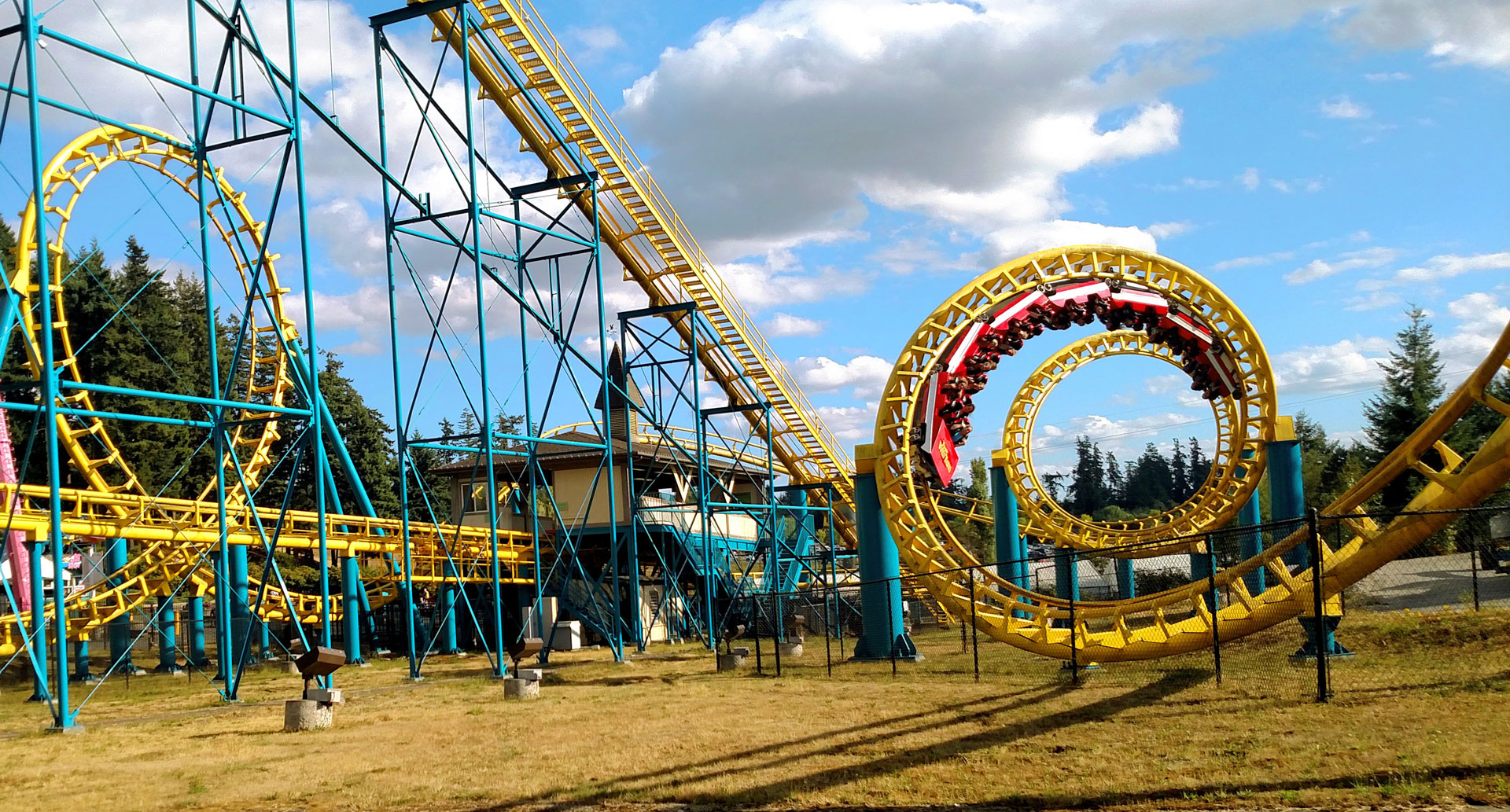
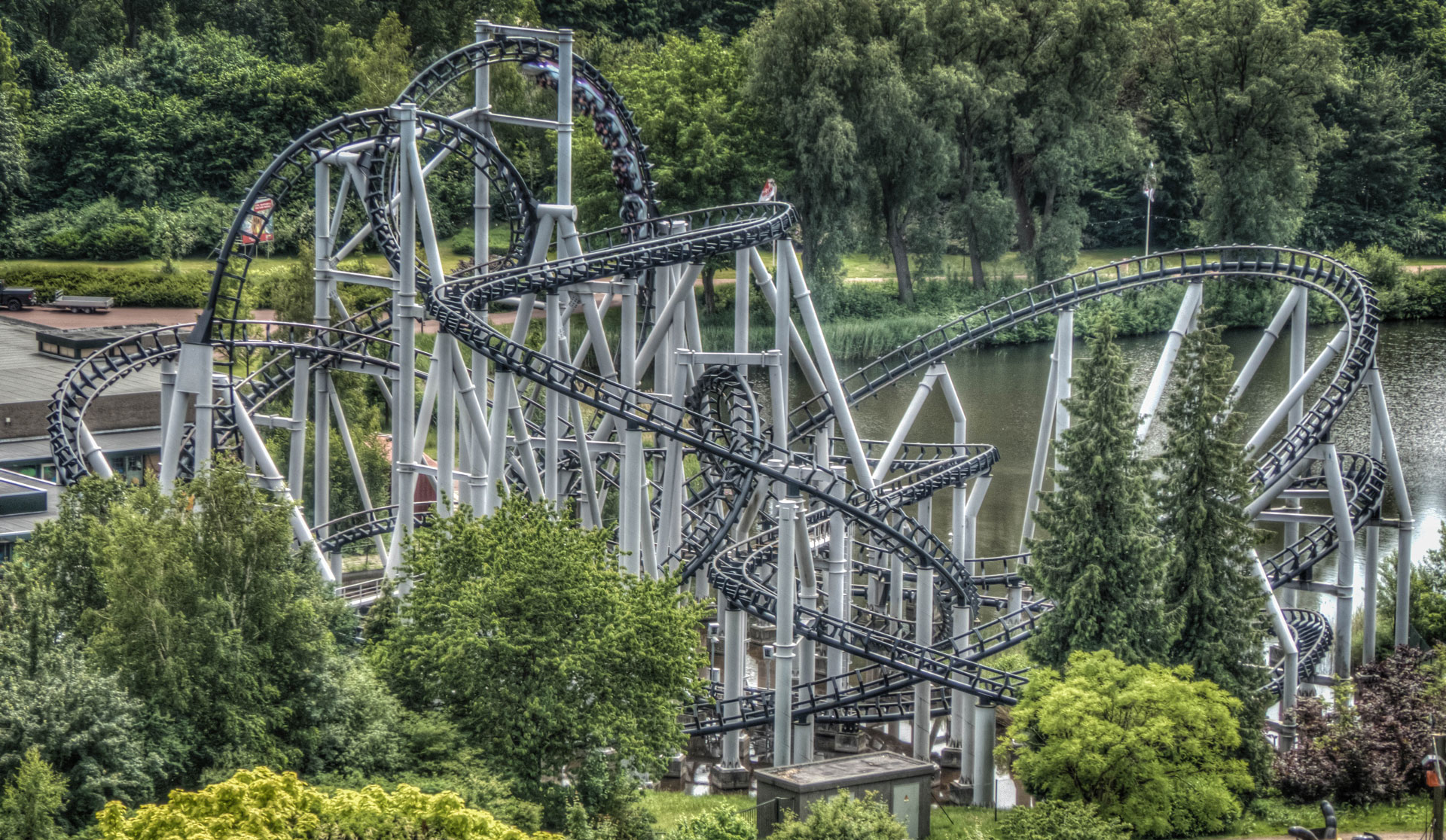
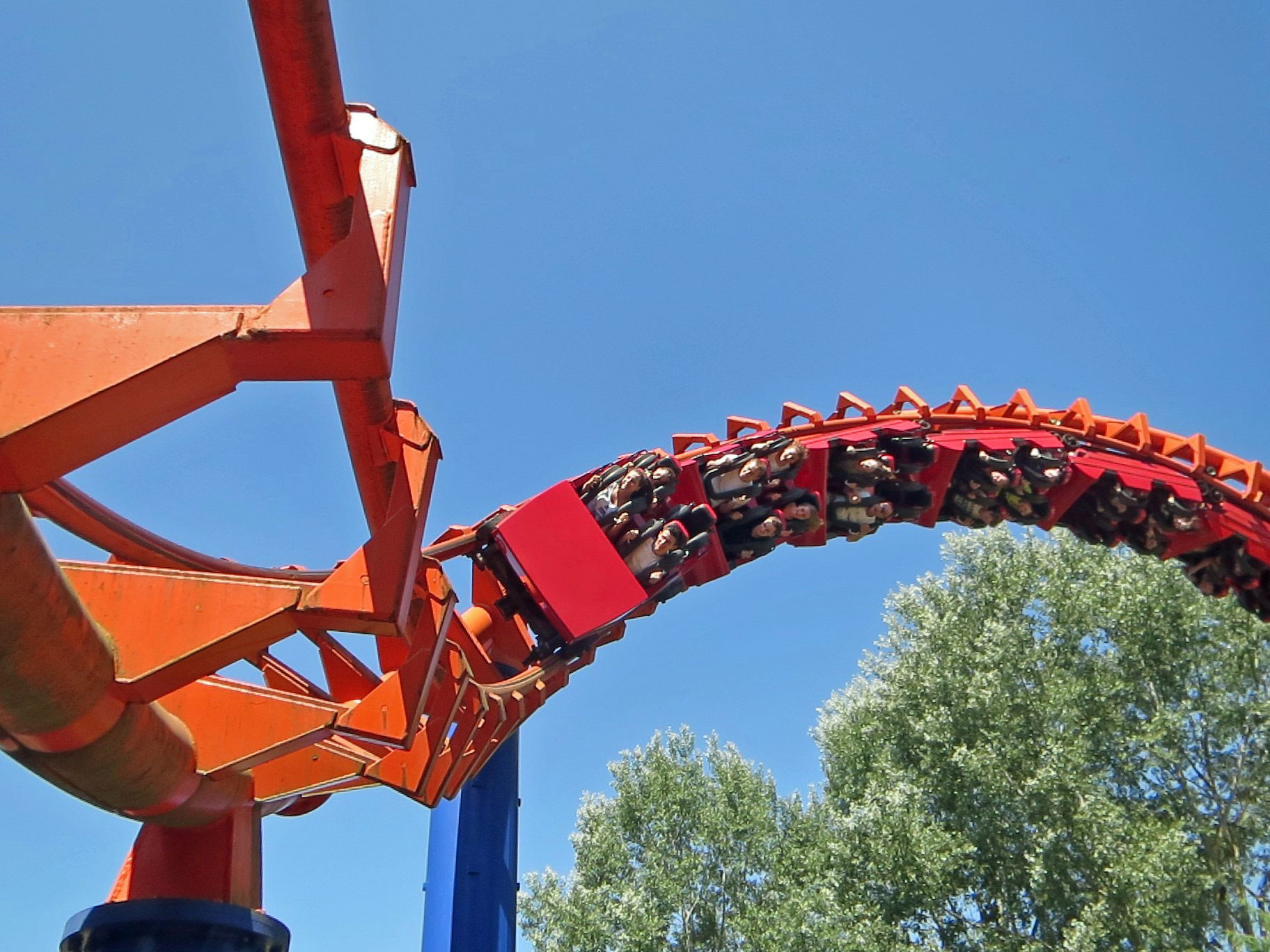
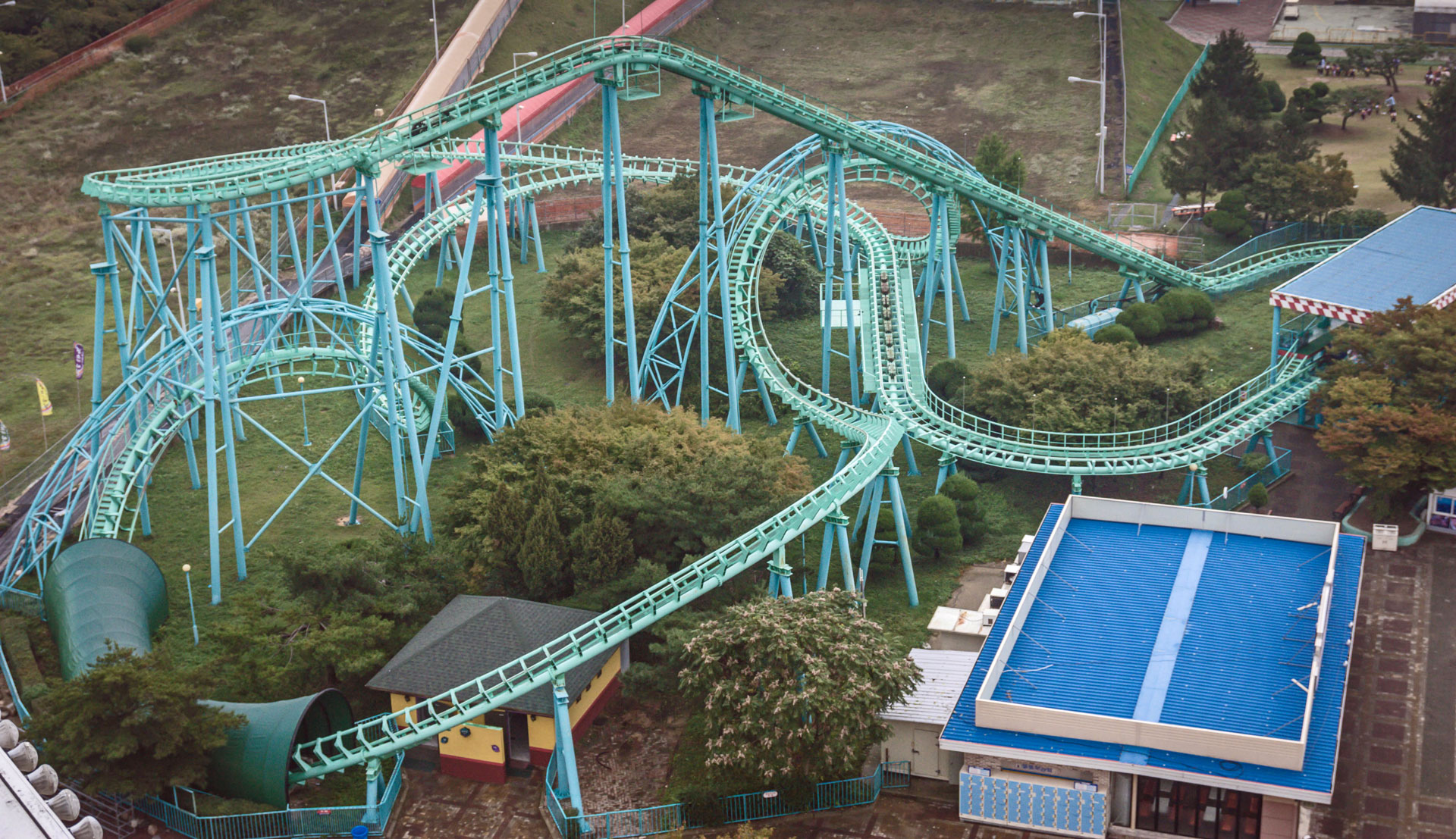
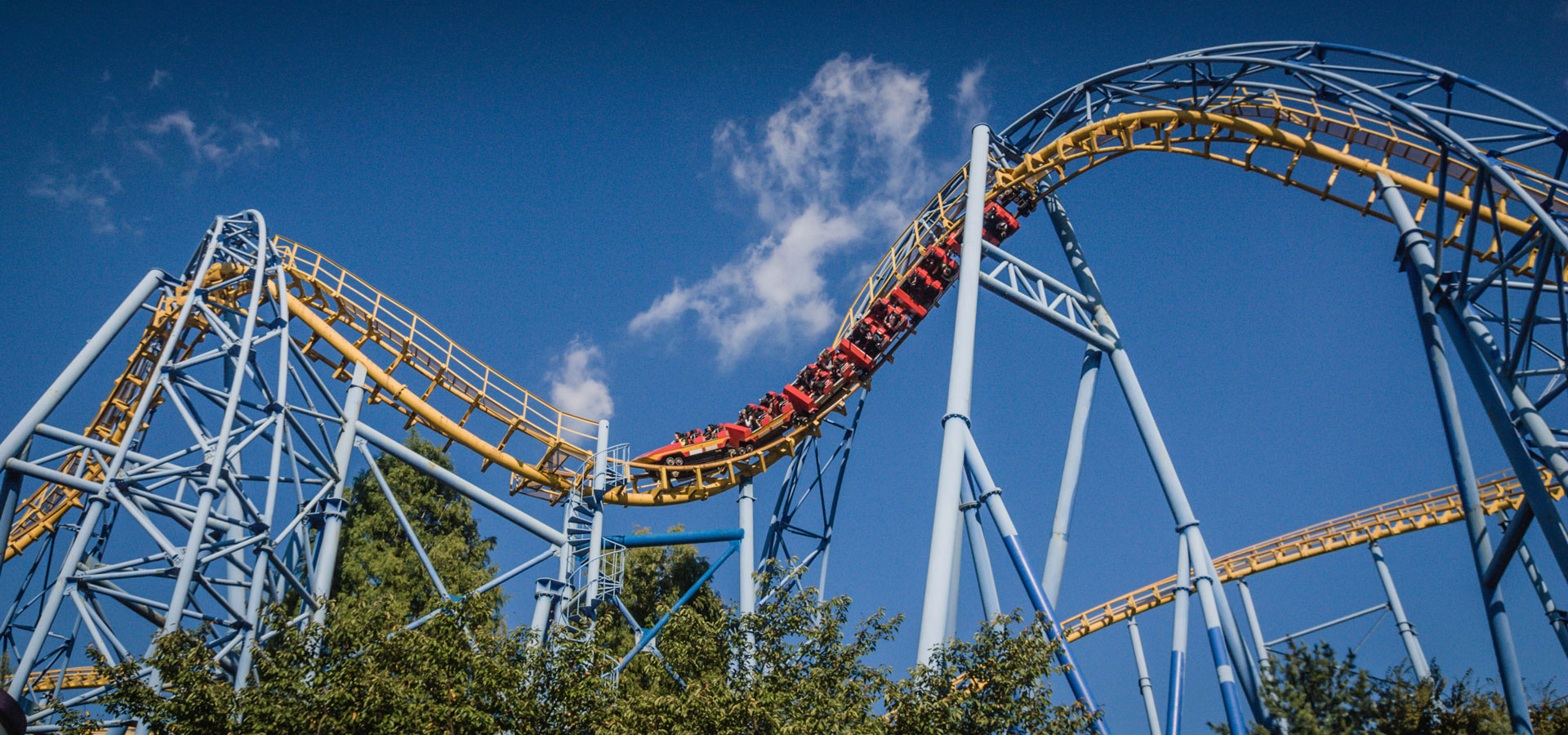
Wild Thing at Wild Waves Enchanted Village in Washington, USA.
A coaster centered on an inversion that remains popular to this day – the corkscrew. A corkscrew coaster (Knott’s Berry Farm’s Corkscrew) was the first successful modern looping coaster.
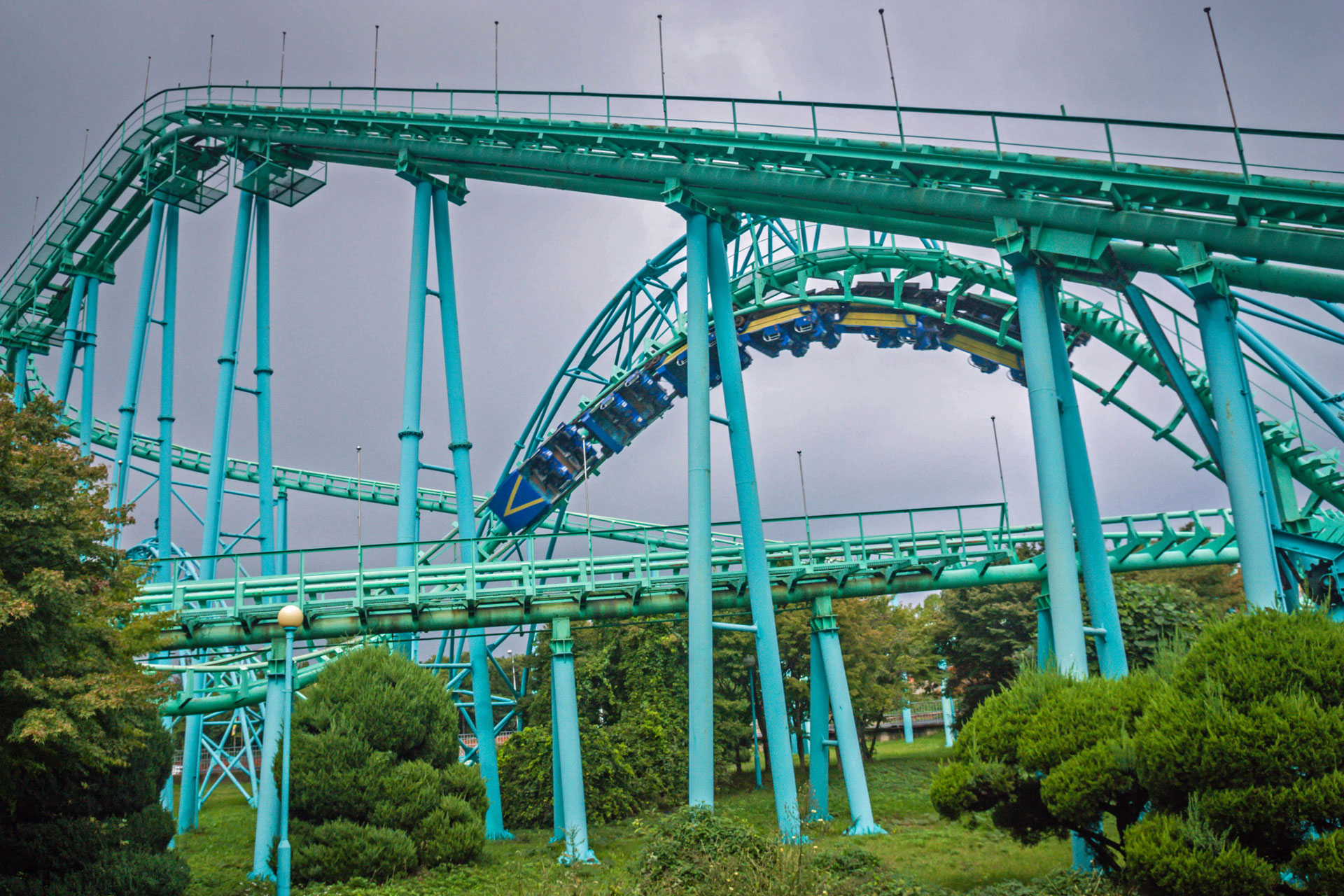
Black Hole 2000 at Seoul Land
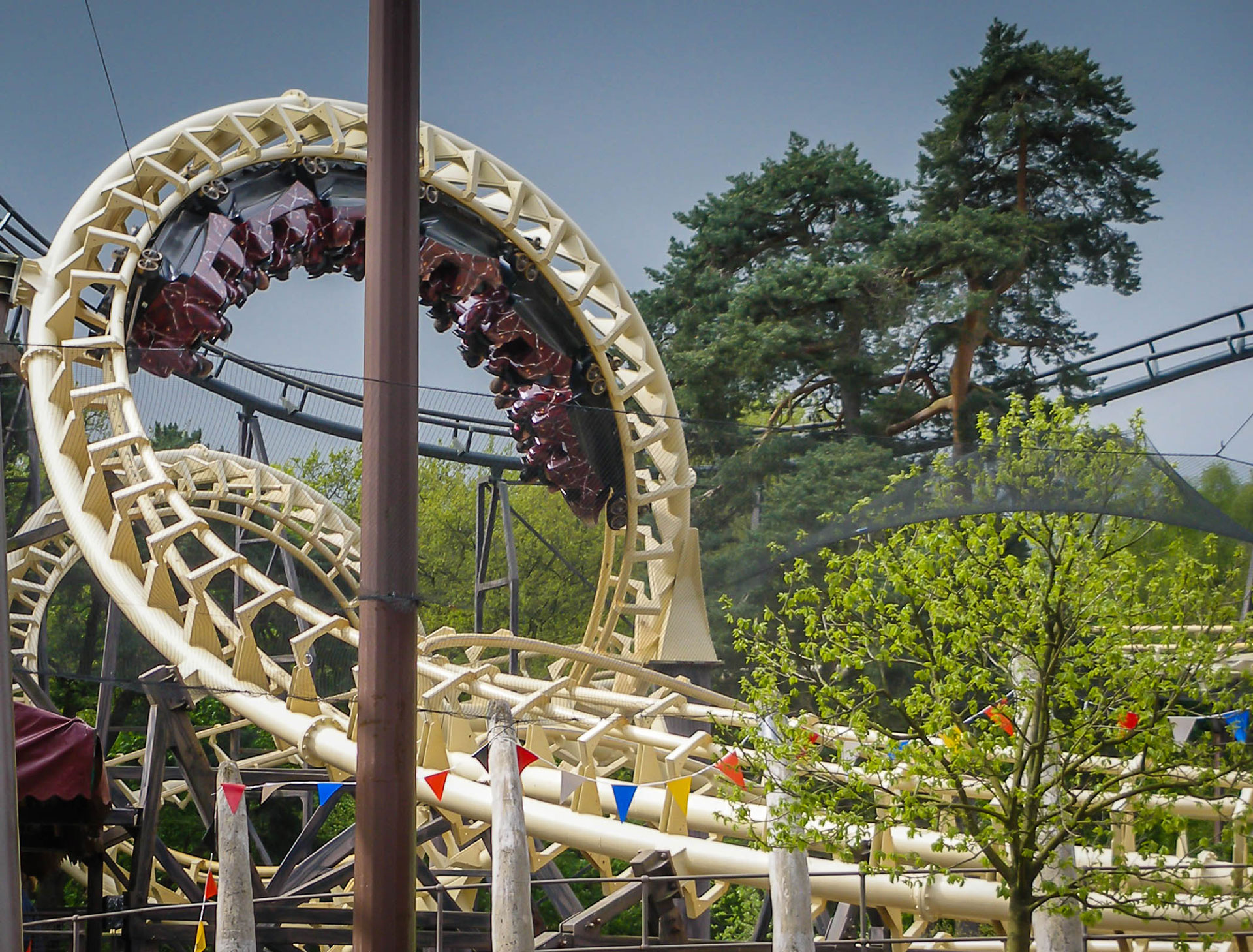
Corkscrew at Alton Towers
Bocaraca at Parque Diversiones
Super Manège at La Ronde in Canada
Space 2000 at Gyeongju World
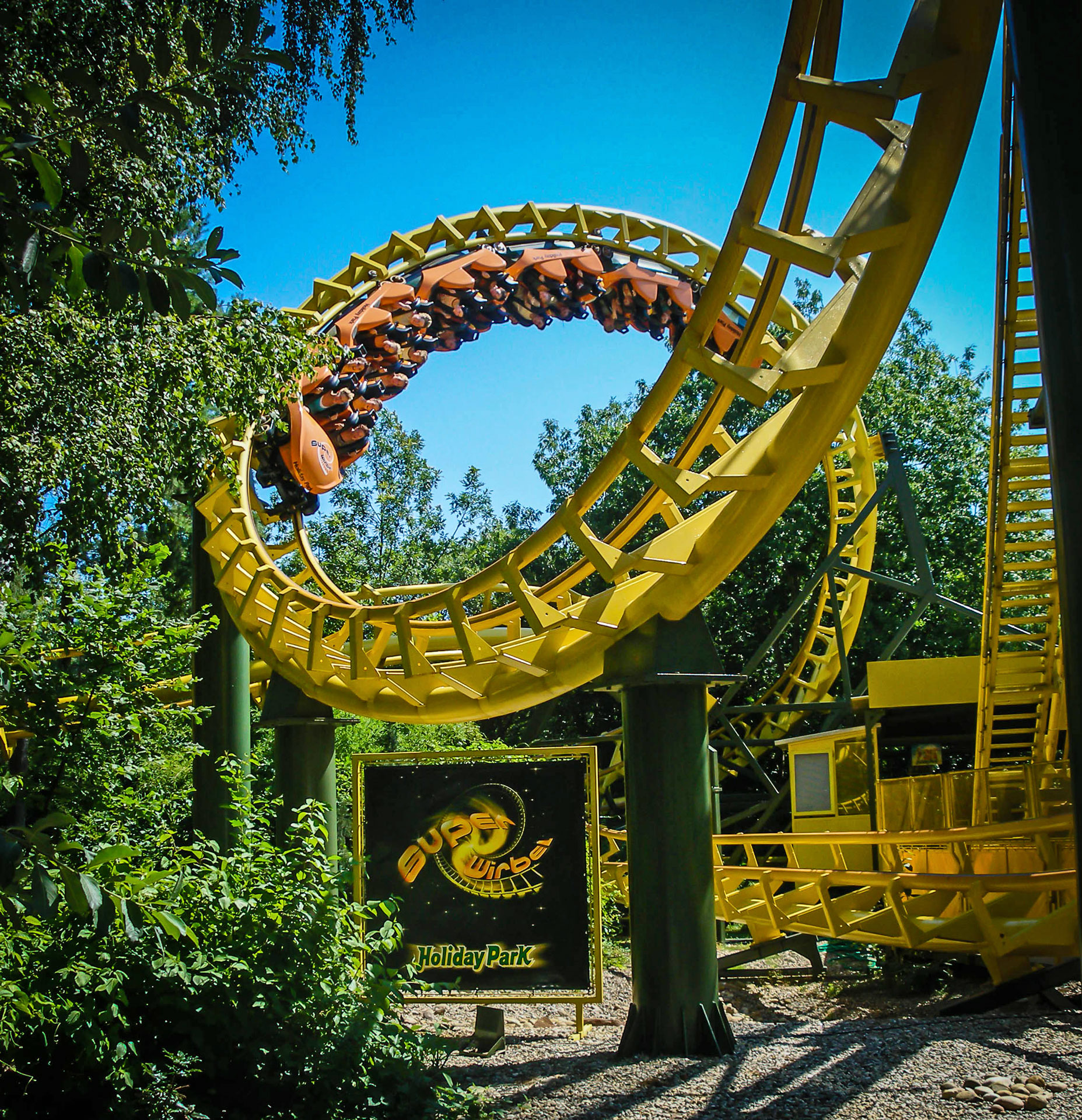
Super Wirbel at Holiday Park
The Original
ARROW CORKSCREW
The original corkscrew coasters consisted of a lift hill, a drop, and a double corkscrew. Over the years, Arrow added a vertical loop and then two vertical loops immediately after the lift hill drop to provide more thrills and a longer ride experience.
The first Arrow Corkscrew opened in 1975 at Knott’s Berry Farm in California, USA, and was relocated to Silverwood Theme Park in Idaho, USA, in 1990. It was the first successful modern roller coaster to turn people upside down, combining two corkscrew inversions with a fairly simple layout.
Variations
VEKOMA CORKSCREW
Although Vekoma corkscrew coaster layouts are more interesting, the ride is rough. They come in two main varieties: the Corkscrew with Bayerncurve model, such as the one that stood at Alton Towers in the UK, and the incredibly compact Whirlwind model, such as Bocaraca at Parque Diversiones in Costa Rica.
Another version is the Hurricane model, of which only two were built – Waly Coaster at Walygator Parc in France and Jester at Six Flags New Orleans, which has been SBNO (standing but not operating) since 2005.
Waly Coaster at Walygator Parc in France.
MEISHO AMUSEMENT MACHINES CORKSCREW
This corkscrew coaster has track and supports over the inversions that resemble Arrow’s style, as do the trains. Space 2000 may have been removed after the 2015 season, as it is no longer on the park map.
Space 2000 at Gyeongju World in South Korea.
Black Hole 2000 is likely a second corkscrew coaster from Meisho, as the track, supports, and trains are similar to those found on Space 2000, as is the coaster’s name. However, this has yet to be confirmed, and the entire coaster stands much higher off the ground and has a different track layout.