
Falcons Flight Obliterates The Records

Falcons Flight opened on December 31, 2025, smashing the records for the fastest, tallest, and longest roller coaster.
First Single Rail Roller Coaster Debuts

In 2018, RMC debuted its first “Raptor Track” coaster with the opening of Wonder Woman Golden Lasso Coaster at Six Flags Fiesta Texas.
First Roller Coaster with Virtual Reality
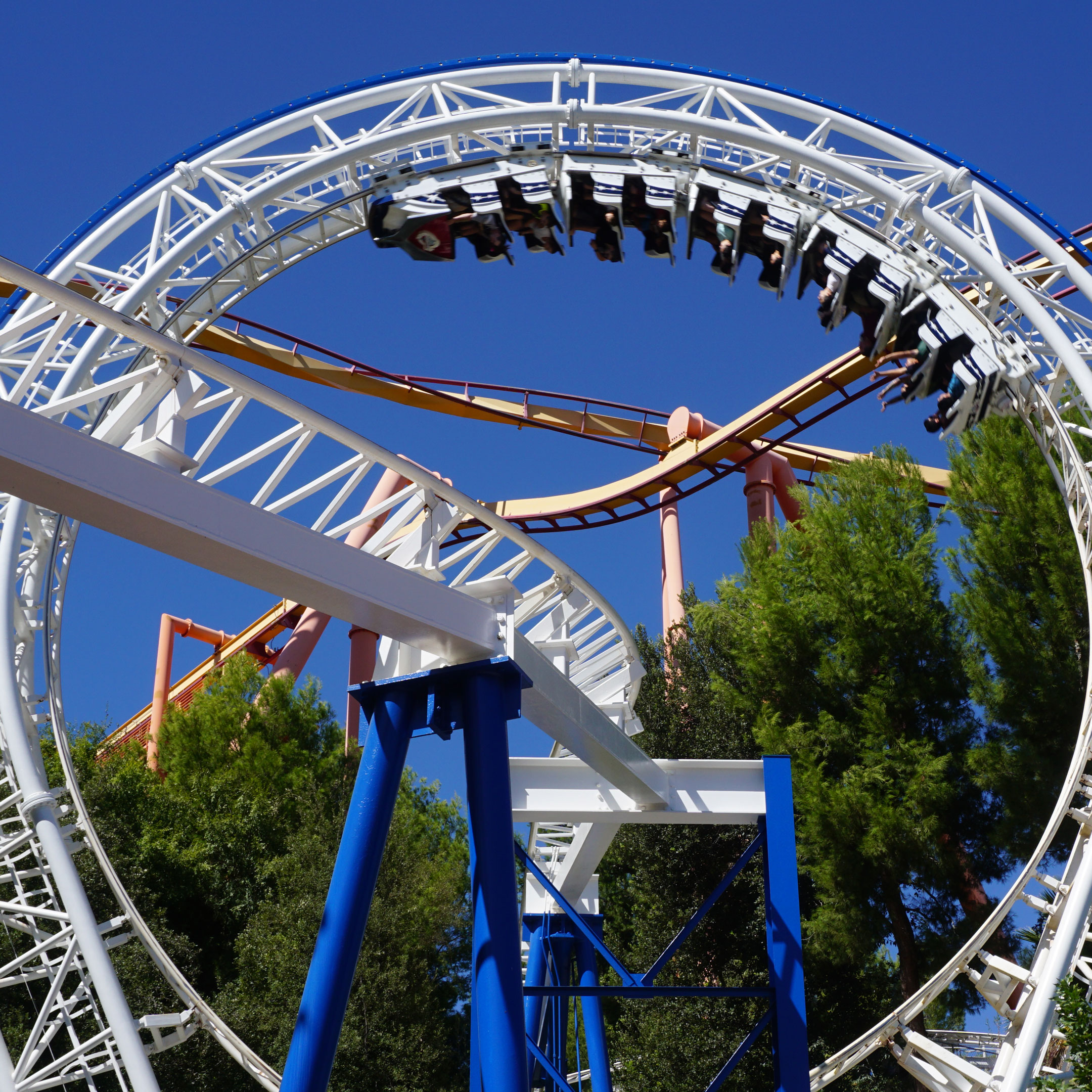
In 2016, the New Revolution Virtual Reality Coaster at Six Flags Magic Mountain opened as the first to feature onboard VR.
RMC Debuts Company’s First Roller Coaster

With the opening of Outlaw Run at Silver Dollar City in 2013, Rocky Mountain Construction showed it could manufacture coasters from the ground up.
B&M Builds First Wing Coaster

B&M started the wing coaster popularity in 2011 with the opening of Raptor at Gardaland in Italy.
RMC Debuts New Texas Giant

In 2010 RMC converted the Texas Giant wooden roller coaster at Six Flags Over Texas to an all-steel track design.
Worlds Only Looping Wooden Coaster Opens

Son of Beast at Kings Island in Ohio opened in May 2009, as the only wooden coaster featuring a vertical loop made of steel.
First Full-Circuit Coaster to Break 400 Feet

Top Thrill Dragster opened in 2003 at Cedar Point in Ohio as the tallest and fastest full-circuit coaster in the world.
First 4th Dimension Roller Coaster Opens

In 2002 Arrow Dynamics debuted X, the world’s first 4th Dimension roller coaster, at Six Flags Magic Mountain in California.
First Roller Coaster with Ten Inversions

Intamin set a roller coaster world record when Colossus opened at Thorpe Park in 2002 with ten inversions.
First Full-Circuit Coaster to Break 300 Feet

Intamin debuted the 310 feet (94 m) tall Millennium Force on May 13, 2000 at Cedar Point in Ohio, USA. The coaster reaches a top speed of 93 mph (150 km/h) and was the first to feature a cable lift.
2000 Onwards - Wooden Coaster Revival?

The breakup of Custom Coasters International in 2002 led to two new wooden coaster companies forming, Gravity Group and Great Coasters International (GCI).
First Coaster to Break 400 Feet, 100 mph

Intamin debuted two magnetic LSM Launch shuttle coasters in 1997, Tower of Terror at Dreamworld in Gold Coast, Australia and Superman The Escape at Six Flags Magic Mountain in California, USA. The latter stands 415 feet (126.5m) tall with a top speed of 100 mph (161 km/h).
First Magnetic Launch Roller Coaster

In 1996, Outer Limits: Flight of Fear opened at Kings Island in Ohio and Kings Dominion in Virginia, USA, as the world’s first magnetic LIM Launch roller coasters. Premier Rides built the coasters, which are often described as resembling a “spaghetti bowl.”
B&M Opens First Inverted Roller Coaster

Designed to give a sense of flight, B&M opened Batman The Ride on May 9, 1992 at Six Flags Great America in Illinois, USA, which provided large, sweeping inversions and intense g-forces. B&M inverted roller coasters remain one of the most popular coasters in the world.
1992-2002 – Wooden Coaster Resurgence

In the 1990’s people became interested in wooden coasters again when Custom Coasters International (CCI) started to build them using modern technology, which led to the company building 34 woodies over the decade.
The Ultimate Claims Longest Coaster Record

Featuring more than 1.4 miles (2.25 km) of track, the Ultimate opened at Lightwater Valley in the UK, on July 17, 1991.
First Full-Length Coaster To Break 200 Feet

Magnum XL-200 opened at Cedar Point in Ohio, USA, on May 6, 1989, as the tallest, fastest, steepest full-length steel roller coaster in the world. The 205 foot (62m) tall coaster would be Arrow Dynamics’ fourth and final installment for Cedar Point.
Vekoma Builds First Boomerang Coaster

In 1984, Vekoma began by building the first Boomerang roller coaster at Six Flags Mexico in Mexico City. Since then, over 50 have been constructed, making it one of the most popular coaster designs in the world.
First Roller Coaster to Break 200 Feet Height

Standing 233 feet (71 m), Moonsault Scramble, built by Sanoyas Hishino Meisho, became the first roller coaster to break the 200 feet (61 m) limit when it opened on June 24, 1983 at Fuji-Q Highland in Fujiyoshida, Japan.
The Beast Claims Longest Coaster Record

On April 14, 1979, The Beast opened at Kings Island in Ohio, USA, as the world’s tallest, fastest, longest roller coaster. Featuring more than 1.4 miles (2.25 km) of track, it remains the longest wooden coaster to this day.
Schwarzkopf Debuts First Launched Coaster

In 1977, three Schwarzkopf shuttle loop coasters – King Kobra, White Lightnin’, and Greased Lightnin’ – opened in the USA as the world’s first launched roller coasters using a 50-ton counterweight to propel the ride forward.
The First Modern Loop Debuts

Schwarzkopf teamed up with Intamin to design Revolution at Six Flags Magic Mountain in California, USA. The coaster opened on May 8, 1976, and featured the first clothoid loop, which produced less intense g-forces than a circular vertical loop.
The First Modern Inversion Debuts

Focused on continuing to push the boundaries of steel roller coaster design, Arrow Dynamics debuted the first modern inversion in 1975 with the Corkscrew at Knott’s Berry Farm in California, USA.
Second Golden Age of Roller Coasters

Roller coasters reentered as the focus of amusement parks in 1972 with the opening of Kings Island in Ohio, USA, which featured The Racer as a central attraction.
Stengel Engineering Founded
Werner Stengel first worked with Anton Schwarzkopf in 1963 to help design the first few Schwarzkopf roller coasters. Stengel recognized how important design was to the coaster industry, which encouraged him to found his Engineering firm in 1965.
First Steel Tubular Track Introduced

Walt Disney opened Matterhorn Bobsleds, a mountain-themed toboggan coaster, in 1959 at Disneyland in California, USA. The steel track design was the first of its kind, using a tubular design that allowed for train wheels to maintain closer contact with the track, creating a smoother ride.
John C. Allen Opens First Roller Coaster

Nightmare opened at Joyland in Kansas, USA, as John C. Allen’s first roller coaster. Allen would go on to design many beloved wooden coasters including Blue Streak at Cedar Point and Racer at Kings Island in Ohio, USA.
First Bobsled Coaster

Following up on his 1926 patent, former British aviator John Norman Bartlett worked with John A. Miler to design and build Flying Turns, a Bobsled Coaster where the train free-wheels through a trough/chute at Lakeside Park in Ohio, USA.
1920’s – First Golden Age of Roller Coasters
During the economic high times of the roaring twenty’s, there was a massive explosion of roller coasters, with more than 300 built throughout the decade. Many of these were based on John A Miller’s new Upstop Wheel design that ensured the train would stay on the track.
Flat Steel Track Introduction
During the early 20th century, “flat” steel track (that is, non-tubular) was used for certain roller coasters to provide a smoother ride than wooden track. Steel track carried the advantage of requiring less maintenance than wooden track, and required less support structure.
Virginia Reel developed

A Virginia Reel had a spinning car going down a twisting track. The one at Pleasure Beach Blackpool in the UK was demolished due to safety issues in 1981 and was one of the last remaining in the world.
John A Miller Builds First Roller Coaster
A founding father of the roller coaster industry, Miller’s first creation was the simply named Roller Coaster at Cascade Park in Pennsylvania, USA. Miller would go on to design more than 140 coasters.
Leap the Dips Built

Leap the Dips, the oldest operating roller coaster in the world, opened on June 2, 1920. It’s a side-friction Toboggan coaster and resides at Lakemount Park in Pennsylvania, USA.
First Scenic Railway
Developed and built by LaMarcus Thompson at Atlantic City in New Jersey, USA, these rides were seen as an exciting tour, rather than a heart-stopping adventure. The ride had wheels underneath, and on the sides, but nothing held the cars onto the track, so speed was controlled by a brakeman.
First Toboggan Coasters Debut

Around the same time as the first Scenic Railway appeared, so did the Toboggan roller coaster. These coasters ran through wooden troughs that featured mild dips and turns, while wheels on the side and bottom of the car guided the train along.
First Commercial Looping Coaster Debut
Flip-Flap Railway, featuring a 25 foot (7.6 m) tall loop, opened at Coney Island in New York, USA.
Switchback Railways Debut

These early coasters were made famous by LeMarcus Thompson and first opened at New York City’s Coney Island in 1884. Though Richard Knudson patented the design first, it was Thompson who brought them to the masses.
First Roller Coasters
In 1817, two wooden tracked “coasters” were built in France. They had very simple layouts, with carriages connected to the track.
First Looping Coasters Debut in Europe
In the 1840s, the first looping coasters appeared in Europe, with one opening in France and a smaller one in the UK.