
Physics
How a Coaster Moves
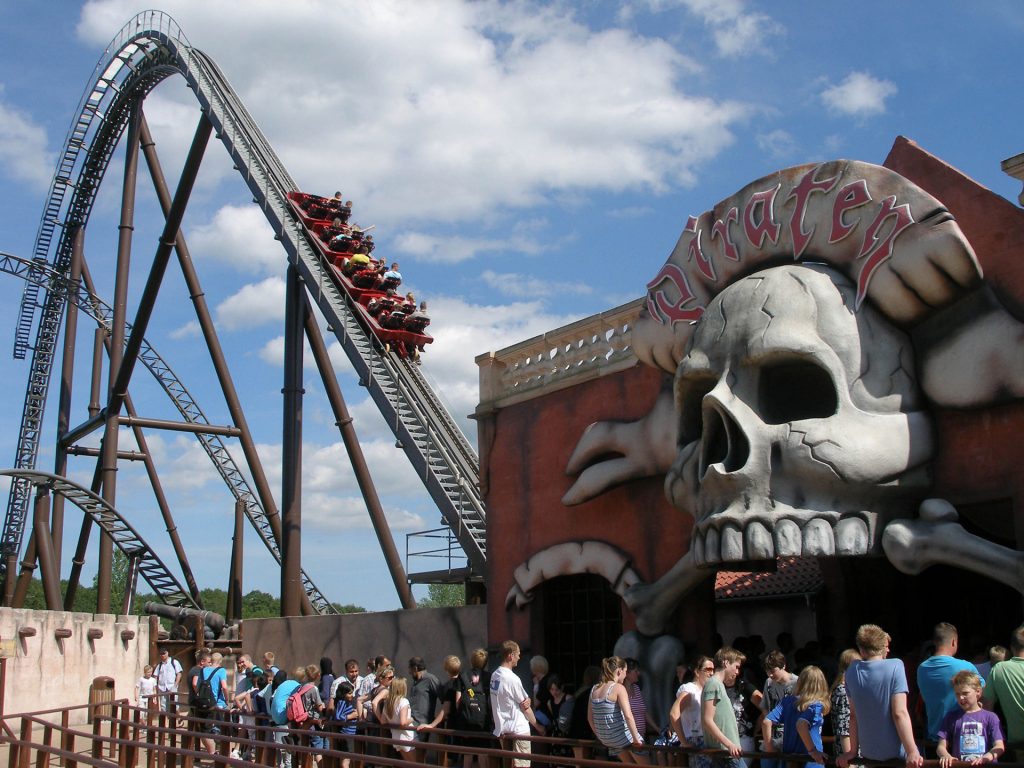
A coaster moves in the same way a marble would roll down a slanted surface. The marble rolls because it has Gravitational Potential Energy. Potential Energy is gathered by an object as it moves upwards, or away from, the Earth. A coaster train gains potential energy as it is pulled up the lift hill to its highest point; the train gains more potential energy the higher it goes.
Situation 1: Flat Straight Track
Situation 2: An Element of Equal Height to the First Drop
Situation 3: An Element of Less Height than the First Drop
G-Forces
Several forces are felt when riding a coaster, and keeping these within safe values is a vital skill for coaster designers.
These forces are known as G-Forces or “G’s”. G stands for Gravity and the number in front of it represents how many times the force of gravity is felt at a particular point. Everybody experiences 1G in everyday life, the regular force of gravity when still. If a theme park says a coaster rider will experience, for example, 4G, the rider will briefly experience four times the force of gravity. In simpler terms, if a rider person weighs 100 kg while standing still, they would momentarily weigh 400 kg at the 4G point of the ride. G Forces vary depending on the element and the entry/exit into and out of it; some elements are more intense than others.
G Forces create the airtime that riders experience. Ejector Airtime is where the rider feels they are being quickly ejected from the coaster. Floater Airtime is a smoother sensation where the rider feels they are weightless.
Positive G
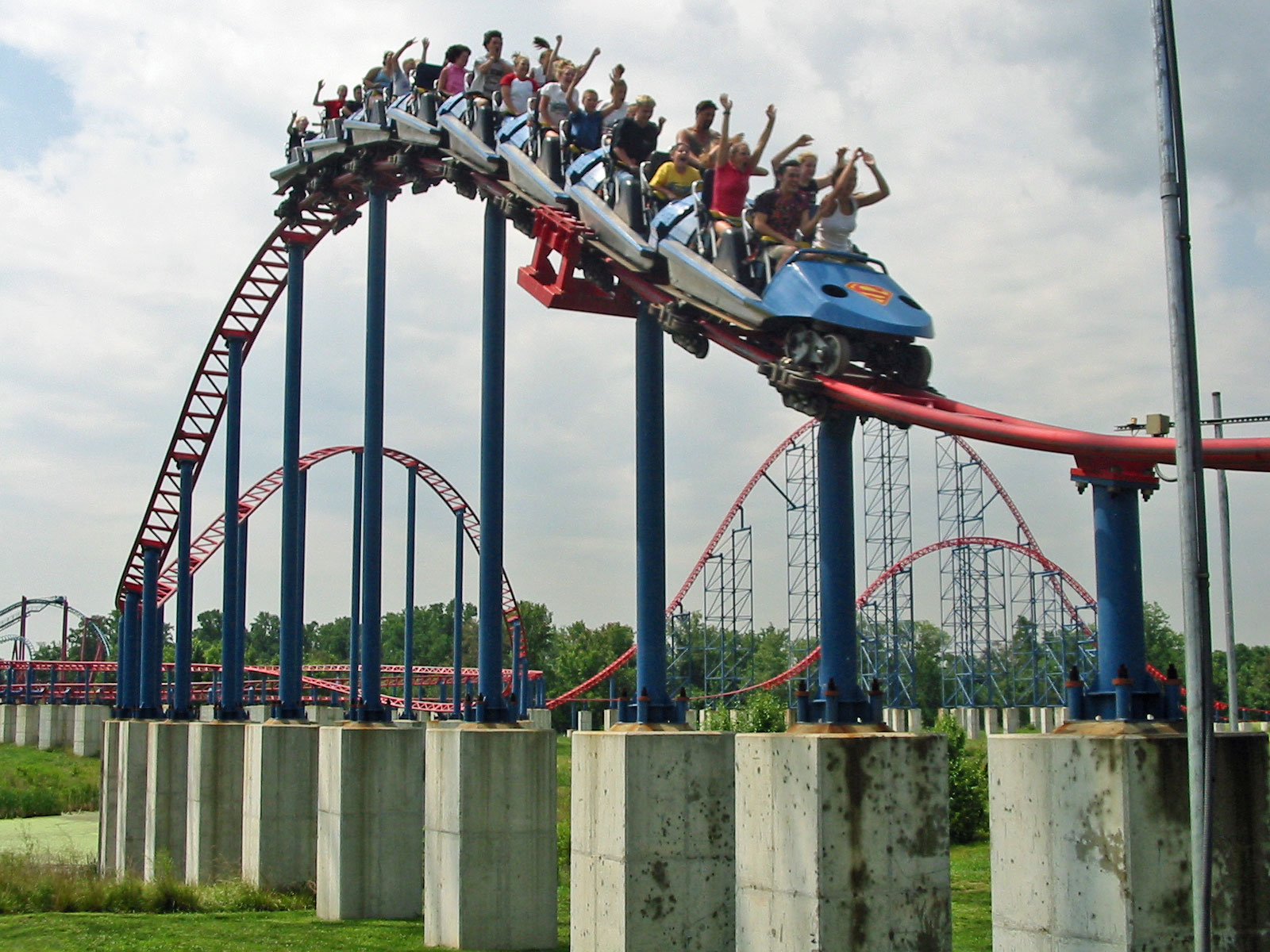
Positive G-Force occurs at the bottom of a drop when the train wants to continue moving in the same direction, but the track forces it in a different direction. The sharpness of this change of direction determines the positive G. Positive G forces typically occur on banked turns or when the train pulls up a hill after going down a drop. For example, on Oblivion at Alton Towers, when the train pulls back up from the vertical drop, a massive 4.5G is exerted on riders for a brief moment.

Negative G
Lateral G
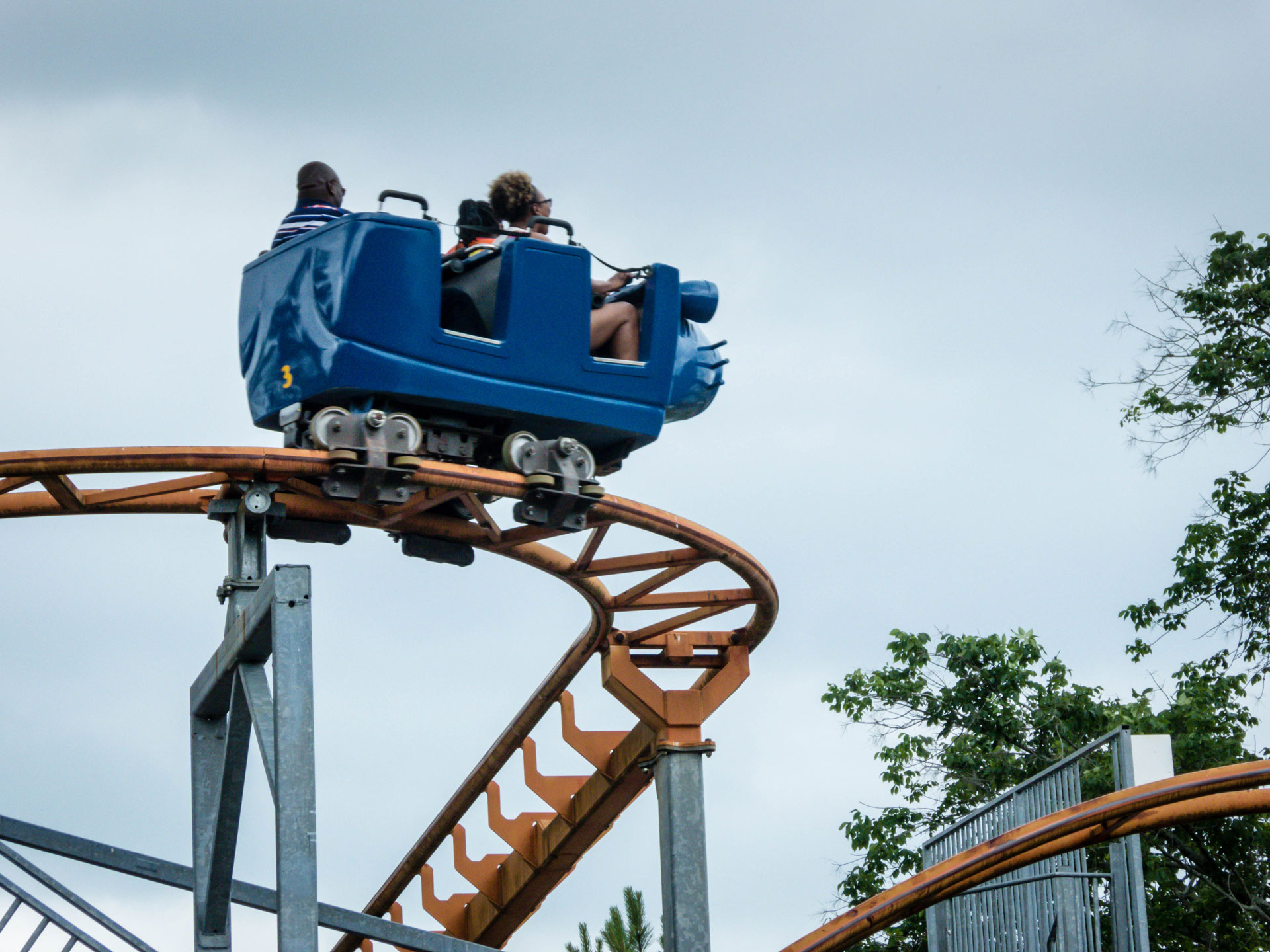
Lateral G Forces occur when a train goes around an un-banked corner, or a corner not banked far enough. This is commonly experienced when riders are abruptly forced sideways, like in the flat hairpin turns found on Wild Mouse coasters. Most high speed coasters contain banked corners, which prevent or lessen lateral G’s and convert them to positive G’s.
Linear G
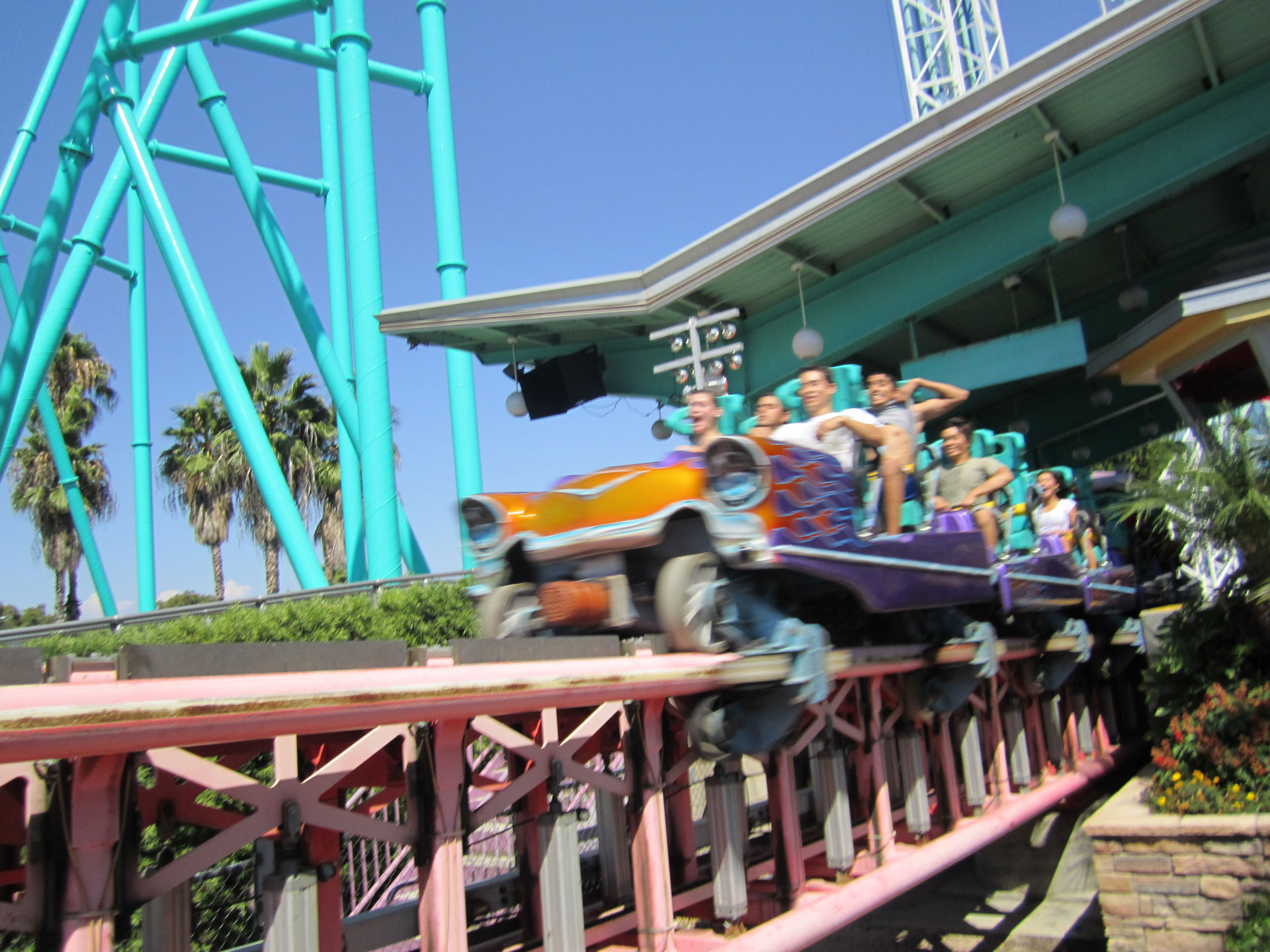
Linear G’s occur when a coaster launches very quickly in a straight line. The human body can tolerate high levels of Linear G forces. Kingda Ka at Six Flags Great Adventure exerts high linear G’s when it accelerates from 0 to 128 mph in around 3.5 seconds. Linear G forces push against riders during high-speed launches.
Human Tolerance and Safe Limits
Positive G’s Head to Foot is denoted by +gz
Negative G’s Foot to Head is denoted -gz
Linear G’s Chest to Back is denoted +gx
Linear G’s Back to Chest is denoted -gx
Lateral G’s Right to Left is denoted +gy
Lateral G’s Left to Right is denoted -gy
The tolerance levels are taken from Paul M. D’s “Bioastronautics Data Book,” NASA SP-3006, 1964 “G Tolerance in 4 vectors”.
Positive G-Force Tolerance
The human body can usually tolerate about +9gz with the aid of a protective suit.
Positive G-Forces becomes uncomfortable for the human body at +5gz.
At 1gz, humans exhibit no ill-effects except for gradual ageing as this is the natural level on earth.
At 2gz, facial tissue sags and hands feel heavy
At 3gz, movement is difficult
At 4gz, visual symptoms and slowed awareness
At 5gz humans are at risk of loss of consciousness
When under high positive G’s, blood is being forced from the head to the feet so riders “grey out”.
Negative G-Force Tolerance
The human body exhibits alarming symptoms at just -2gz and on a coaster a level higher than -1gz would be considered dangerous.
At -1gz, humans exhibit a sense of pressure in their head
At -2gz, there will be a severe headache, nose bleeds and swelling of the eyelids
At -3gz, Eyes will bleed, vision will fade, eyes will feel as though they are popping out their head
At -4gz, mental confusion and unconsciousness
At -5gz humans are at risk of losing their eyeballs and death.
When under high Negative G’s, blood is rushing to the head and can cause very serious organ problems‘Red Out’ and cause your brain to bleed.
Linear G-Force Tolerance
Human’s can tolerate up to 17 Linear G’s Front to Back and -7 Linear G’s Back to Front.
Lateral G-Force Tolerance
Humans can tolerate high levels of lateral G’s if properly restrained; otherwise injury to the body can occur.